You're not choosing a framework. You're choosing a strategy.
A Wardley Map analysis of three interconnected plays that explain LangChain's ecosystem.
If your organization or you are building with AI agents in 2026, you've probably chosen a side: LangChain, CrewAI, AutoGen, or maybe you're going raw with provider SDKs. But have you stopped to ask why LangChain's ecosystem looks the way it does? Why LangSmith traces any framework, not just LangChain? Why model integrations are free and ubiquitous? Why Fleet exists at all?
These aren't random product decisions. They're strategic moves — and once you see the pattern, you can't unsee it.
I used Wardley Maps to decompose LangChain's value chain and found three interconnected plays that explain their current position and why the ecosystem is so hard to replicate.
What is a Wardley Map?
Before we dive in, let's establish the tool. A Wardley Map is a strategic visualization invented by Simon Wardley, who used it to guide Canonical's strategy in making Ubuntu one of the most successful Linux distributions. Wardley attributes much of that success to the maps themselves.
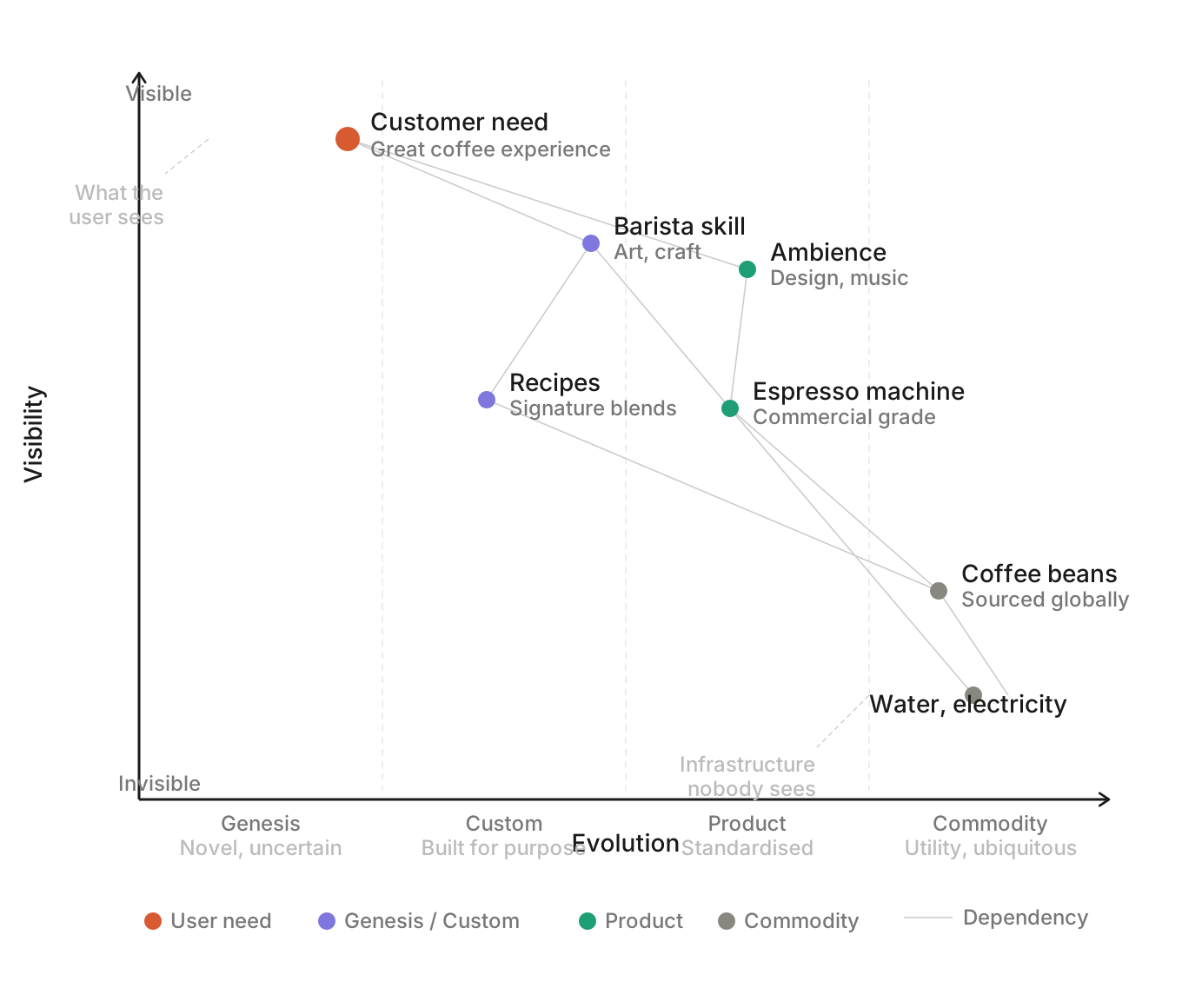
A Wardley Map plots components of a value chain on two axes. The vertical axis represents visibility to the user — components at the top are things the end user interacts with directly; components at the bottom are invisible infrastructure. The horizontal axis represents evolution — how mature a component is, from Genesis (novel, poorly understood) through Custom (built for specific needs) and Product (standardized, off-the-shelf) to Commodity (utility, interchangeable).
Let's think about a coffee shop. Figure 0 shows how its Wardley map would look like.
The power of the map isn't the snapshot — it's what happens when you start asking: which components are moving, in which direction, and who benefits? Wardley identified a set of recurring strategic patterns — "gameplay" — that organizations use to shift the landscape in their favor. Three of those patterns turned out to be central to LangChain's strategy.
The map: LangChain's value chain in April 2026
Here's the high-level decomposition. At the top sits the user need: businesses wanting to build and operate reliable AI agents. Below that, the components stack in order of decreasing visibility:
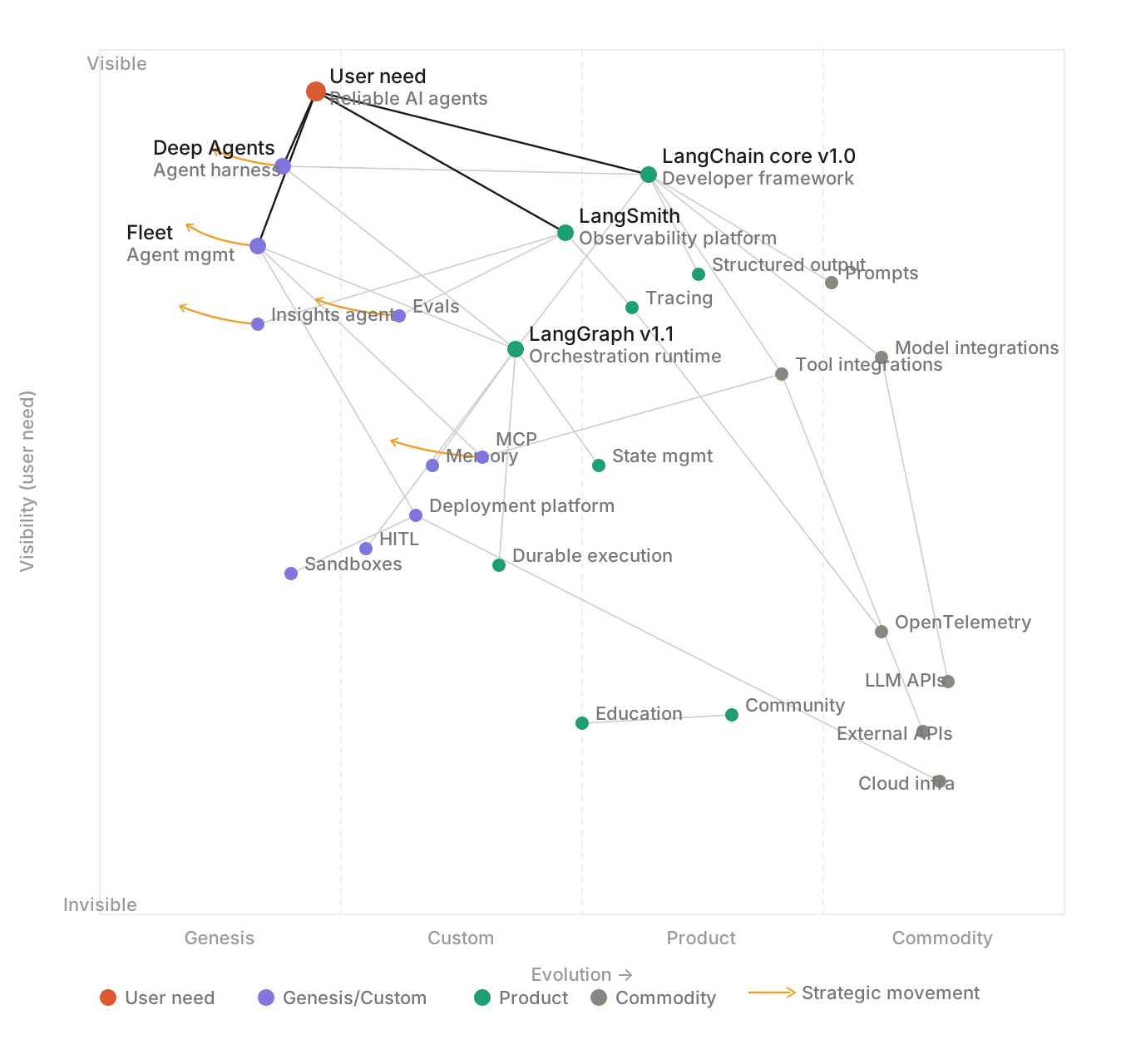
Developer-facing layer (most visible): LangChain core v1.0 is the high-level abstraction developers interact with directly — create_agent, middleware, integrations, structured outputs. Next to it, Deep Agents offers a "batteries-included" harness with planning, filesystem, and subagents. LangSmith provides observability, and Fleet offers no-code agent management.
Orchestration runtime: LangGraph v1.1 sits below LangChain core — this is critical to get right. LangChain core is built on top of LangGraph, not the other way around. LangGraph is the low-level engine: graph-based state machines, durable execution, checkpointing, streaming, human-in-the-loop.
Capabilities: State management, persistent memory, HITL patterns, MCP protocol support, durable execution, sandboxes.
Commodity layer (invisible): Model integrations (900+), tool integrations, OpenTelemetry, LLM provider APIs, cloud infrastructure. These are interchangeable and ubiquitous — and that's deliberate.
With the map laid out, let's look at the three plays.
Play 1: the classic ILC — commoditize integrations, capture value in orchestration
ILC stands for Innovate-Leverage-Commoditise, and it's the most powerful pattern in the Wardley playbook. The idea: deliberately push one layer toward commodity so that the value migrates to the layer you control.
LangChain is doing this textbook-style with model and tool integrations. By making 900+ integrations free, open-source, and trivially easy to add, they've made the choice of which LLM to use irrelevant. OpenAI, Anthropic, Google, DeepSeek — swap them in one line. The integrations are commodity.
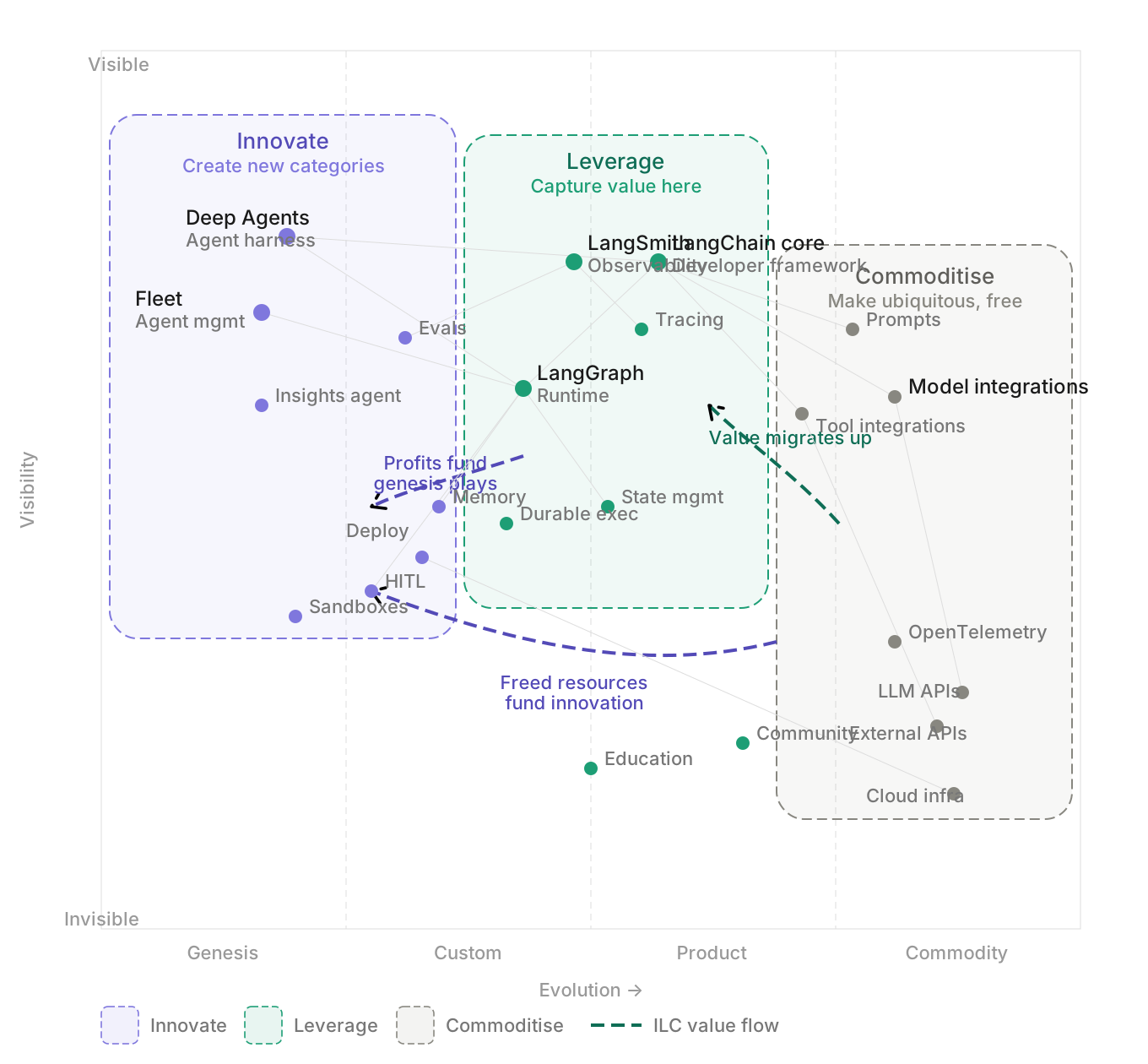
But here's the consequence: if model access is commodity, where does the value go? It migrates to how you orchestrate the model — which is LangGraph — and how you observe the model — which is LangSmith. These are the layers LangChain controls and differentiates on.
The self-reinforcing dynamic is the key insight: every new LLM that enters the market strengthens LangChain's position rather than threatening it. LangChain immediately absorbs the integration (commoditise), the model becomes interchangeable, and the value stays captured in orchestration and observability (leverage). Meanwhile, the revenue from the Leverage zone funds the Genesis plays — Deep Agents, Fleet, Sandboxes, the Insights Agent (innovate).
It's the same pattern Amazon executed with AWS: commoditize infrastructure to capture value in the platform. And it's working for the same reason — the commoditized layer grows the total market while the differentiated layer captures the margin.
Play 2: the observability-orchestration pincer
This is the most elegant move on the map.
LangSmith is framework-agnostic. It supports OpenTelemetry, it traces CrewAI apps, AutoGen apps, raw OpenAI SDK calls — anything. This isn't a limitation; it's the upper jaw of a pincer movement. By welcoming everyone's traces, LangSmith becomes the default observability layer for the entire agent ecosystem — regardless of framework choice. Once a team's debug workflow lives in LangSmith, the switching cost starts accumulating.
Meanwhile, LangGraph is the lower jaw. Teams using simpler frameworks or raw SDKs eventually hit a ceiling: they need durable execution, complex state management, human-in-the-loop approvals, or persistent memory across sessions. These are hard problems that LangGraph solves uniquely well. When they hit that ceiling, LangGraph is the natural upgrade — especially if they're already using LangSmith.
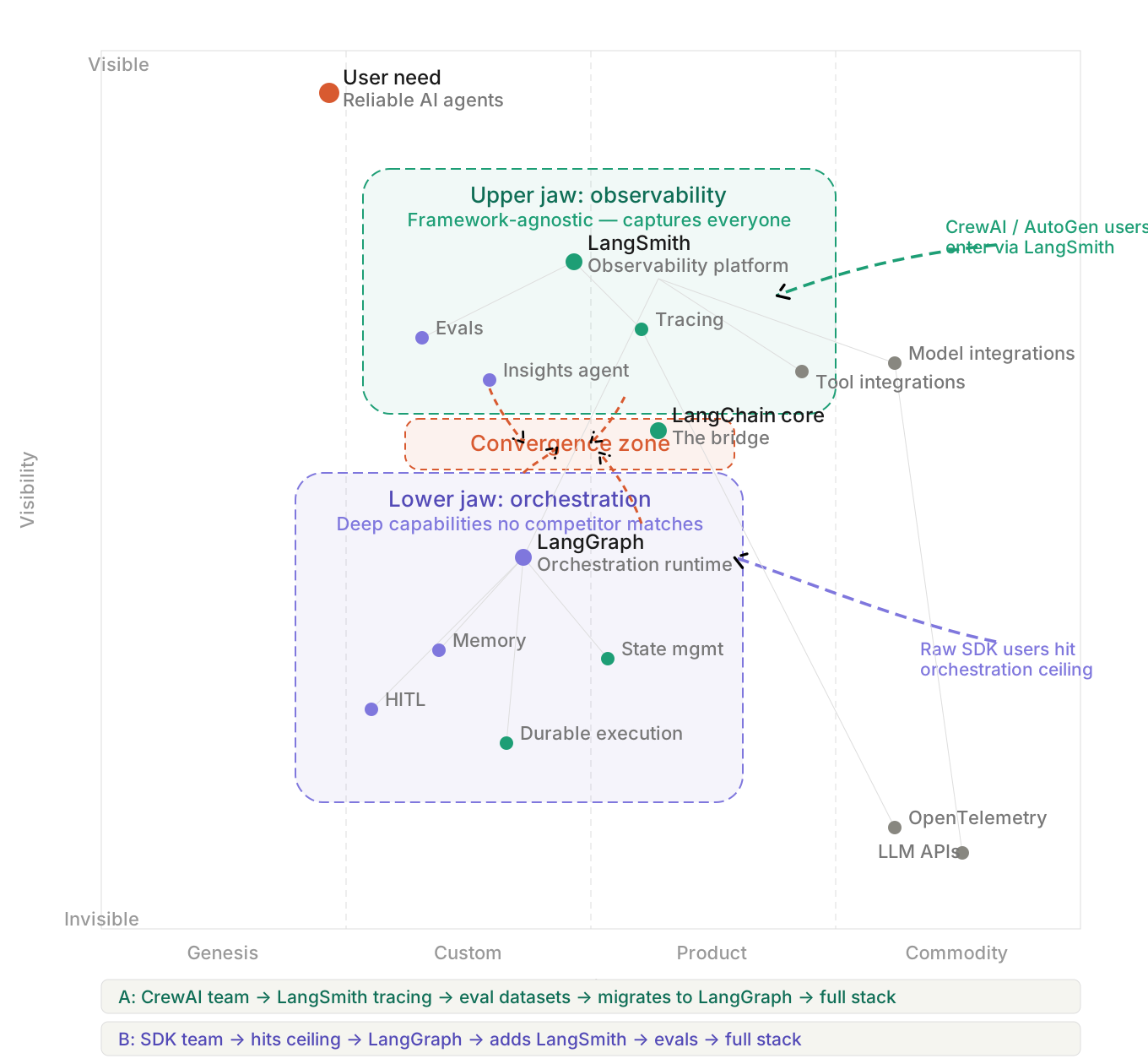
The jaws converge at LangChain core. Two paths, same destination:
Entry via observability: A team adds LangSmith tracing → builds eval datasets from traces → realizes LangGraph deployment and evals are tighter integrated → migrates orchestration to LangGraph. By this point, their institutional knowledge about agent quality lives in LangSmith.
Entry via orchestration: A team outgrows their current framework → needs state, HITL, and durable execution → adopts LangGraph → naturally adds LangSmith for debugging → evals follow → full ecosystem adoption.
Each jaw reinforces the other: teams that enter through tracing accumulate eval datasets that are more valuable when the runtime is LangGraph (because the traces are structurally richer), and teams that enter through orchestration need LangSmith to debug graph-state complexity that is opaque without structured traces.
This is why "LangSmith works with any framework" is a feature, not a compromise. It's the widest possible top-of-funnel.
Play 3: the eval flywheel — compounding data gravity
The third play is the moat that deepens over time. It's a self-reinforcing cycle with five stages:
- Production agent runs in production, handling real requests.
- Traces are generated — structured timelines of every decision, tool call, and state transition.
- Eval datasets are curated from traces — teams select examples of good and bad behavior, annotate edge cases, build golden sets.
- Automated evals run against the datasets — LLM-as-judge, code evals, composite scores, pairwise comparisons.
- Agent improvements are made based on eval results — prompt changes, tool selection, guardrails — and the improved agent goes back to production.
Each cycle makes the next one faster. But the critical insight is about switching cost: it compounds.
At cycle 1, you've just instrumented traces — low commitment. By cycle 3, you've curated datasets and established eval baselines — that represents real work. By cycle 10, you've accumulated traces, curated datasets, pairwise preference data, Insights Agent patterns, and team workflows built around the LangSmith UI. At this point, migrating doesn't mean re-instrumenting. It means losing months of institutional knowledge about what "good agent behavior" looks like in your domain.
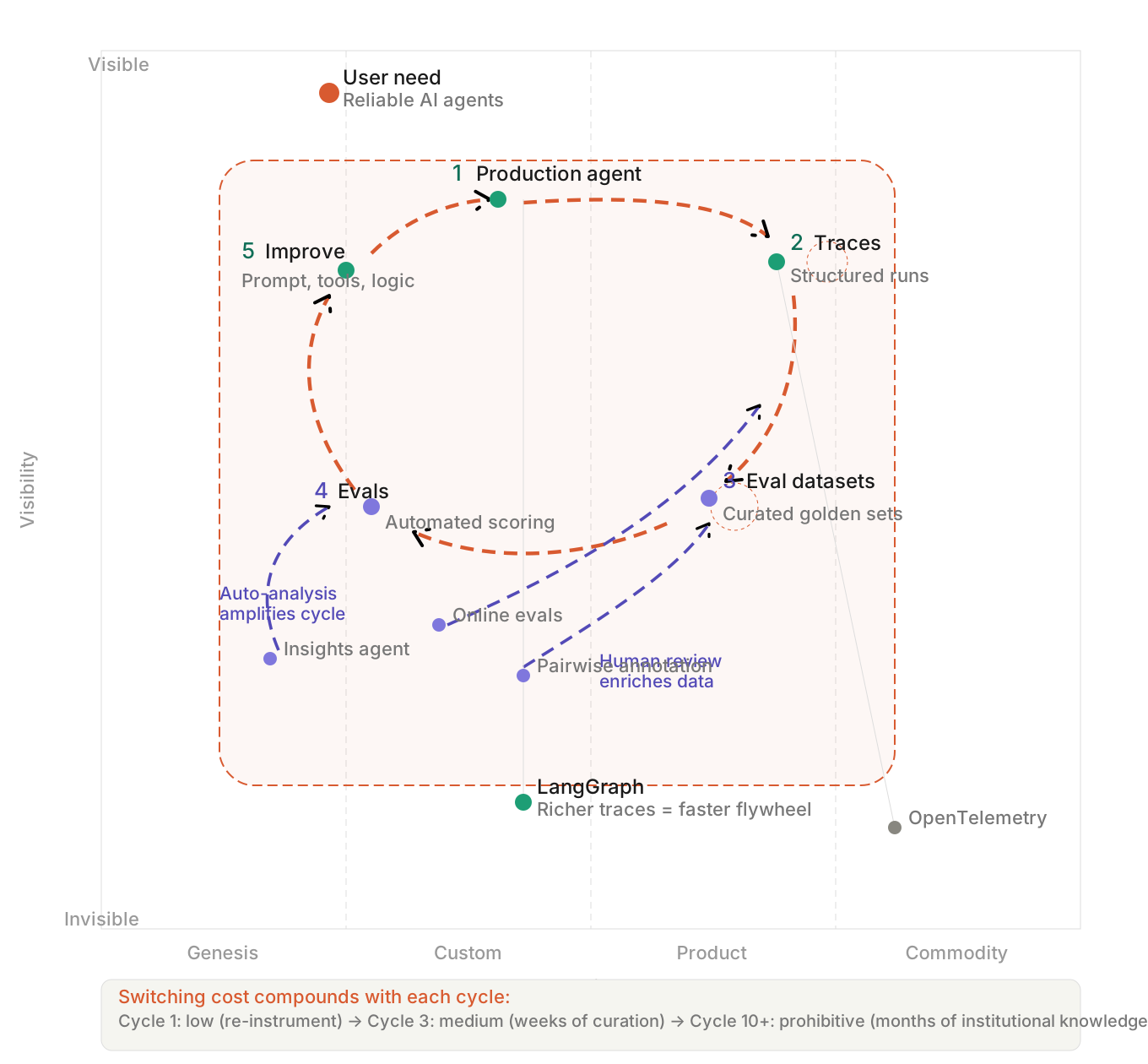
Three secondary loops accelerate the flywheel: the Insights Agent (Polly) auto-analyzes traces to surface patterns without human effort; pairwise annotation queues let reviewers compare outputs side-by-side, producing high-quality preference data; and online multi-turn evals provide real-time feedback during production conversations.
The analogy is Waze: each user contributing traffic data makes the product more valuable for everyone, and nobody takes "their" contributions when they leave. Except here, it's not traffic data — it's engineering decisions about agent quality.
Now, other observability platforms can build a similar traces-to-evals loop in isolation. But the flywheel spins faster on LangChain's stack because of the other two plays. The ILC ensures that integrations are frictionless (more teams enter the cycle). The pincer ensures that teams arrive from multiple entry points (wider funnel). And when the flywheel runs on LangSmith + LangGraph together, the traces are structurally richer than what you get through generic OpenTelemetry — LangSmith understands LangGraph's graph states, node transitions, checkpoints, and interrupts at a native level, producing better eval datasets per cycle.
The moat isn't any single play. It's the three plays operating as a system.
Looking ahead: where the strategy is going next
The Wardley Map reveals where LangChain is investing next, and it's consistent with the ILC logic:
Fleet is the boldest Genesis bet. It's creating a category that barely exists: no-code AI agent fleet management for enterprise. If it works, LangChain's addressable market expands from developers to entire organizations. The parallel is Heroku — taking something technical and making it accessible to a wider audience. Fleet already includes agent identity, permissions, triggers, channels, and skills — the building blocks of enterprise agent operations.
Deep Agents is the high-autonomy play. While LangChain core and LangGraph give you building blocks and runtime, Deep Agents gives you a fully equipped agent harness: planning, filesystem access, subagent spawning, and context management out of the box. It's the answer to "I want an agent that works in 5 minutes" without sacrificing the power of the underlying stack.
Sandboxes address the enterprise security concern head-on: locked-down temporary environments where agents can execute code safely, with granular access control. This removes one of the last blockers for regulated industries to adopt production agents.
Each of these moves follows the same pattern: innovate at the Genesis edge, leverage through the Product core (LangGraph + LangSmith), and let the commoditized integrations widen the base.
What this means if you're building agents today
The strategic lesson from this analysis isn't just about LangChain — it's about how to think about your own agent stack choices.
The framework code isn't where the value accumulates. You can rewrite an agent in a weekend. What you can't easily recreate are the eval datasets, the curated traces, the pairwise preferences, and the team workflows you've built around a specific observability platform.
Start with observability early. The flywheel only compounds if you start the cycle. Teams that add LangSmith tracing from day one — even on a simple agent — begin accumulating the data that makes every future iteration faster.
Think in systems, not components. The question isn't "which orchestration framework has the best API?" It's "which ecosystem will create the strongest compounding improvement loop for my agents over the next 18 months?"
Simon Wardley built maps to make strategy visible. When you map LangChain's ecosystem, what becomes visible is that the product decisions that seem disconnected — framework-agnostic tracing, free integrations, a no-code agent builder — are actually coordinated moves in a coherent strategic game. And if you're building agents seriously, that coherence is why it's worth paying attention.